How to Find (and Protect) Your Brand Voice in the Age of AI
What Is a Brand Voice?
Think of your brand as a person.
Your brand voice is the way your business shows up for the world, the way your business speaks to its audience and competitors, and the way your business handles any obstacles thrown in its way.
A brand voice felt through the words a brand chooses and avoids, the rhythm of its sentences, the level of formality, the things it’s willing to joke about and the things it isn’t.
To better understand let’s take a look at a few brands that do it well.
Brands That Get It Right
Wendy’s: Confident and Unafraid to Roast
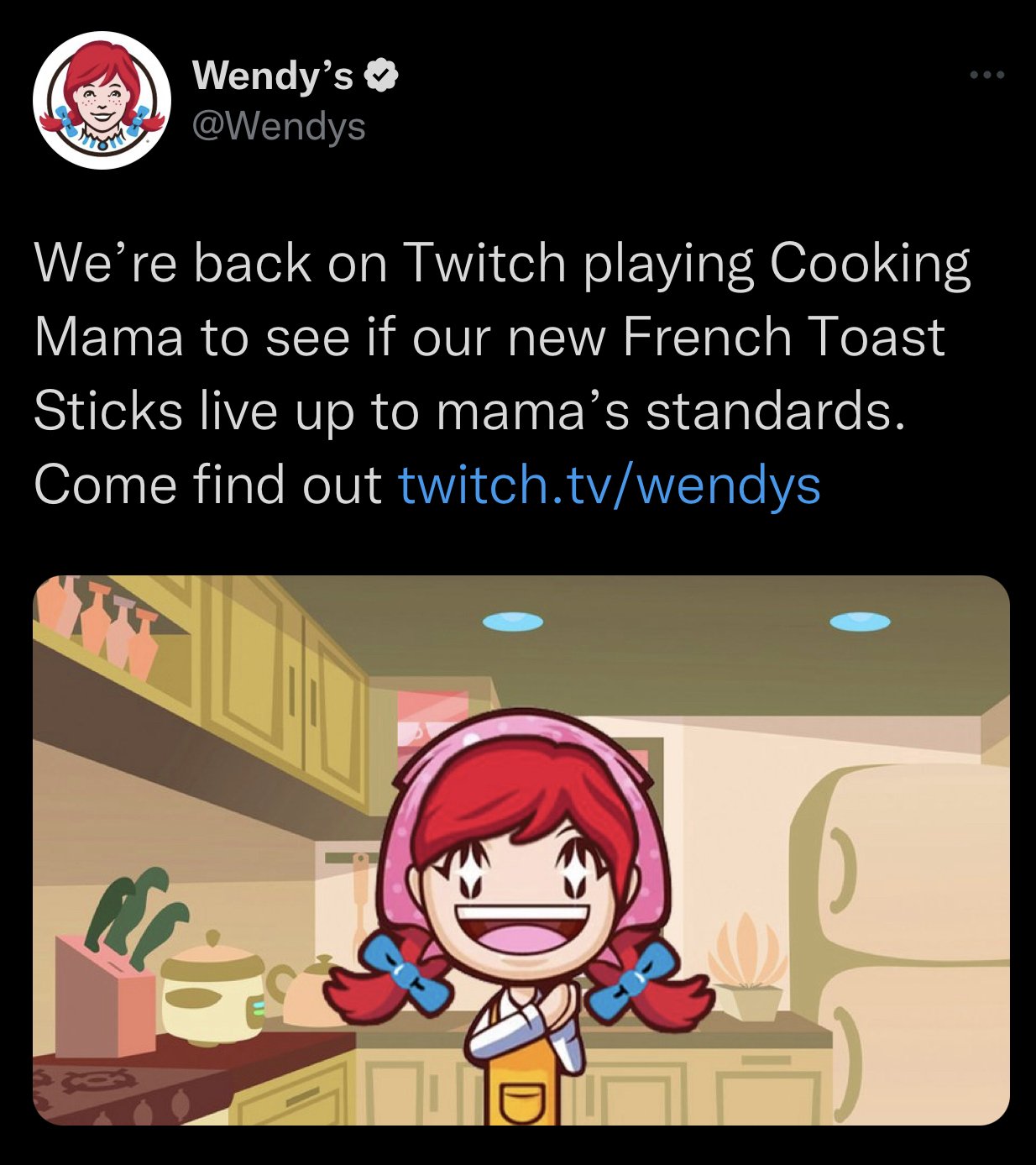
Wendy’s staying active on Twitch, a platform popular among millennials and gen-z that has 140 Million unique monthly visitors.
Wendy’s is a brand with a big personality that really understands its target audience. Whoever is behind their Twitter account is snarky, funny, takes jabs at their competitor, and really stands out among all other fast food accounts.
This is a great example of choosing the right medium to have a conversation with your audience and creating a big personality to connect with them.
If you think about it… what does a fast food restaurant really have to say on X (Twitter)?
Wendy’s built one of the most recognizable brand voices in fast food, not through a tagline, but through years of consistent, sharp-tongued social media replies.
The brand roasts competitors, claps back at fans, and never sounds like it’s trying too hard to be funny.
What makes it work is restraint: the confidence reads as earned, not desperate.
There are many ways to sell a burger, but making your future customers chuckle at a post on X is the fastest way to becoming an option on a weeknight when they are too tired to make dinner.
Duolingo: Chaotic on Purpose
If you have been on Tiktok, you know that Duolingo’s mascot runs one of the most beloved accounts on there (they have the numbers to prove it). This brand analysis of Duolingo’s social media success highlights how they got there.
But I want to focus on how they really allowed their brand personality to shine. Duolingo is a language learning app but it manages to connect with its audience by being relatable, funny, and doing everything but telling you to start learning a new language today.
Their success isn’t random. Duolingo’s own brand guidelines describes their voice as expressive, playful, and worldly.
By steering away from how-to videos, and instead jumping on trending sounds and being snarky in the comments section of other people and business’ social media, they have left their mark and are always using their personality as a vehicle to sell and encourage their audience to use their platform, after a little chuckle at their social media you find yourself thinking “you know what, today’s a great day to start learning a new language!”.
One of my favourite parts of that analysis is what Zaria Parvez, Duolingo’s ex-social media manager said:
“Instagram is how you would probably talk to a colleague, Facebook is how you talk to your like, grandma, and TikTok is how you talk to, like, a close friend.”
This goes back to imagining your brand as a person with its own characteristics and voice.
Duolingo turned a language-learning app into one of the internet’s most talked-about brands by leaning into humor that’s a little unhinged, especially through its owl mascot’s antics on TikTok.
Wealthsimple: Calm Confidence in a Cold Industry
Wealthsimple took the opposite approach from Wendy’s and Duolingo, and it works just as well.
Traditional finance brands lean heavily on jargon, icy blues and greens, and a tone designed to project institutional authority.
Wealthsimple rebuilt its brand around plain language instead: “add money,” “buy Bitcoin,” with no talk of ETFs, MERs, or K-factors unless a customer specifically wants the detail.
The company has described its own goal as building the most human financial services brand in the world, and it backs that up with a warm, jargon-free color palette and content, like its long-running “Money Diaries” interview series, designed to make money conversations feel personal rather than clinical.
The lesson here is that a distinctive voice doesn’t require jokes. It requires knowing exactly what your category sounds like by default, and deliberately sounding like something else.
Why Having a Brand Voice Actually Matters
A consistent voice does three things for a business that inconsistent, generic communication never can.
It makes a brand recognizable without a logo in sight. If you removed the name from a Wendy’s tweet, a Duolingo notification, or a Wealthsimple help article, you’d likely still know which brand you were reading. That’s not an accident. It’s the payoff of years of deliberate consistency.
It builds trust faster. People extend more trust to businesses that feel like they have a genuine point of view, because a real personality is harder to fake than a polished logo. Wealthsimple’s whole trust strategy rests on this: sounding human is what makes people comfortable handing over their money.
It becomes a business asset, not just a creative one. A well-defined voice speeds up every piece of content a business produces, because the tone-of-voice decisions are already made. Nobody has to guess what “on brand” sounds like. And the data backs this up: companies with documented voice guidelines see meaningfully higher engagement and brand recall than those without them.
How to Create a Brand Voice
Building a real brand voice, not just a vague sense of “friendly and professional,” takes a bit more structure than picking a few adjectives.
1. Get specific about who you’re talking to and why. Voice should be shaped by audience expectations as much as by internal preference.
A financial services company like Wealthsimple and a fast food brand like Wendy's can't sound the same way, not because one is more creative than the other, but because their audiences expect different things.
2. Build a real reference document, not a mood. List the words you use and the words you avoid. Note sentence length and rhythm. Include real examples of “on voice” and “off voice” copy side by side.
3. Test it against real scenarios. Draft a customer complaint reply, a product announcement, and an error message in the defined voice. If all three still sound recognizably like the brand, the voice guidelines are working. If they don’t, the document needs more specificity, not more adjectives.
4. Revisit it as the brand grows. A voice built for a five-person startup may need refinement once a brand is speaking to a bigger, more varied audience. Consistency doesn’t mean the voice can never evolve, it means the evolution is deliberate rather than accidental.
What AI Has Changed for Marketing Agencies
Here’s the uncomfortable truth: most brands now write with the same handful of AI tools, trained on largely the same data. When every business prompts for “professional and friendly copy,” the tools tend to hand back a similar flavor of professional and friendly.
Distinctiveness is quietly disappearing across all industries, and it’s happening at a pace human writers alone never could have caused.
There’s a compounding effect worth understanding too. As more AI-generated content gets published and then folded back into the data future models train on, output drifts toward an average of an average. Left unchecked, the sameness problem doesn’t stay flat, it gets worse over time.
But here’s the part that should change how you think about this, rather than just worry about it: because most companies won’t put in the work to properly document and enforce a real voice, the few that do stand out disproportionately.
That’s not a hopeful spin, it’s simply how competitive advantage works when the floor rises for everyone at once.
AI raises the baseline of “acceptable” content across every industry. It does nothing to raise the ceiling of “distinctive.” That gap is where a real brand voice becomes more valuable, not less.
In a landscape where a growing share of content on the internet is AI-assisted, sounding like an actual, specific business instead of a well-formatted average is no longer a nice-to-have. It’s one of the few competitive advantages left that a competitor can’t just copy by using the same tools you do.
AI as a Tool, But Not the Only Tool
None of this means AI should be kept out of the content process. Used well, it’s a genuine advantage. Used carelessly, it’s the fastest way to sound like everyone else.
The difference comes down to sequencing. Brands that document their voice first, then use AI to help scale it, tend to stay distinctive. Brands that skip straight to prompting a model with vague tone instructions are the ones getting homogenized, because a model with no real voice reference to work from will default to the most statistically common version of “friendly” or “professional” it’s seen.
Think of it as division of labor rather than replacement. AI is well suited to drafting, scaling, and speeding up production once direction exists.
It has no way of knowing the specific client story, the timely reference, the particular point of view that makes a piece of writing actually belong to your brand rather than to the internet’s average version of your industry. That part still has to come from a person paying attention.
This is exactly why a real brandbook, with documented tone-of-voice guidelines, specific word choices, and clear examples of on-voice and off-voice writing, has become more useful than ever.
It was always the artifact that kept a growing team consistent. Now it doubles as the reference material that keeps AI-assisted content on-brand instead of drifting toward generic.
The businesses handling this well aren’t the ones with access to fancier AI tools. Everyone has access to roughly the same models. The advantage belongs to the businesses that built something distinctive to feed into them in the first place.
The Bottom Line
A brand voice was always worth the work of defining properly. What’s changed is the cost of skipping that work.
In a content landscape where an enormous share of what gets published is AI-assisted, a documented, specific, genuinely-yours voice isn’t just a nice creative touch anymore, it’s one of the last things a competitor can’t simply replicate by opening the same tool you did.